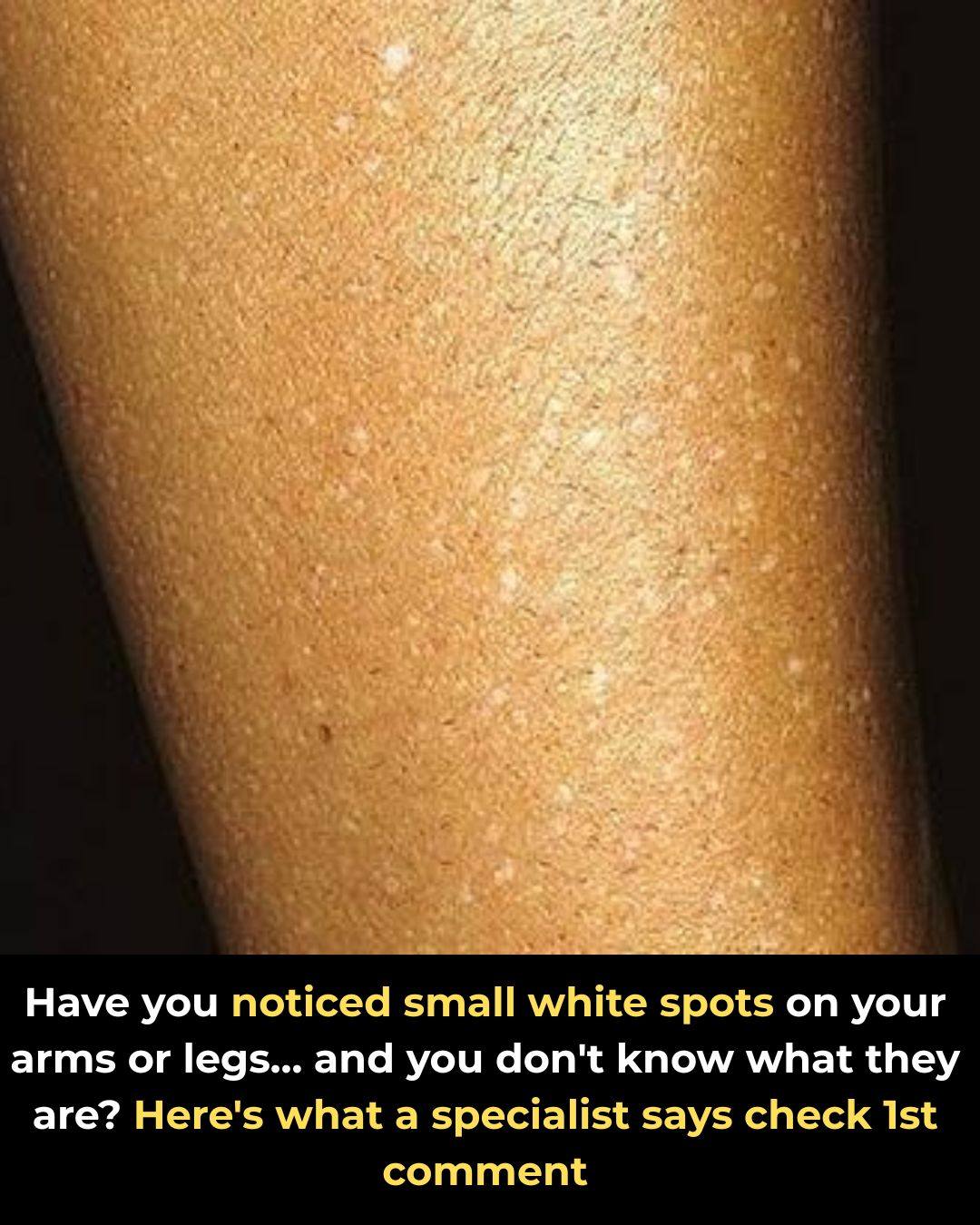
As the last traces of a summer tan begin to fade, many people notice small, pale dots appearing on their legs and arms. These tiny white marks often stand out more clearly against slightly darker surrounding skin. For some, they seem to increase in number with age, leading to confusion and concern.
If you’ve seen these little patches and wondered what they are or whether they’re dangerous, the answer may reassure you.
What Are These White Spots?
These spots are commonly known as idiopathic guttate hypomelanosis (IGH). Although the name sounds intimidating, the condition itself is harmless and very common.
IGH refers to small, flat, white patches of skin that appear due to a reduction or loss of melanin, the pigment responsible for skin color. These spots usually measure only a few millimeters in size and can appear on people of all skin tones and ethnic backgrounds. Most often, they show up on areas frequently exposed to the sun, such as the arms, legs, and sometimes the face.
Statistics suggest that between 50% and 80% of people over the age of 40 will develop at least a few of these spots. They are considered a natural part of the skin’s aging process.
Why Do They Appear?The primary cause of IGH is long-term sun exposure. Over time, ultraviolet (UV) radiation damages melanocyte cells—the cells responsible for producing melanin. When these cells stop functioning or disappear altogether in small areas of the skin, those areas become lighter than the surrounding skin.
In short:
Sun exposure damages pigment-producing cells
Less melanin is produced in specific spots
Those areas appear white or pale
The good news? These spots are not harmful and do not indicate a serious health condition.
Can White Spots Be Removed?