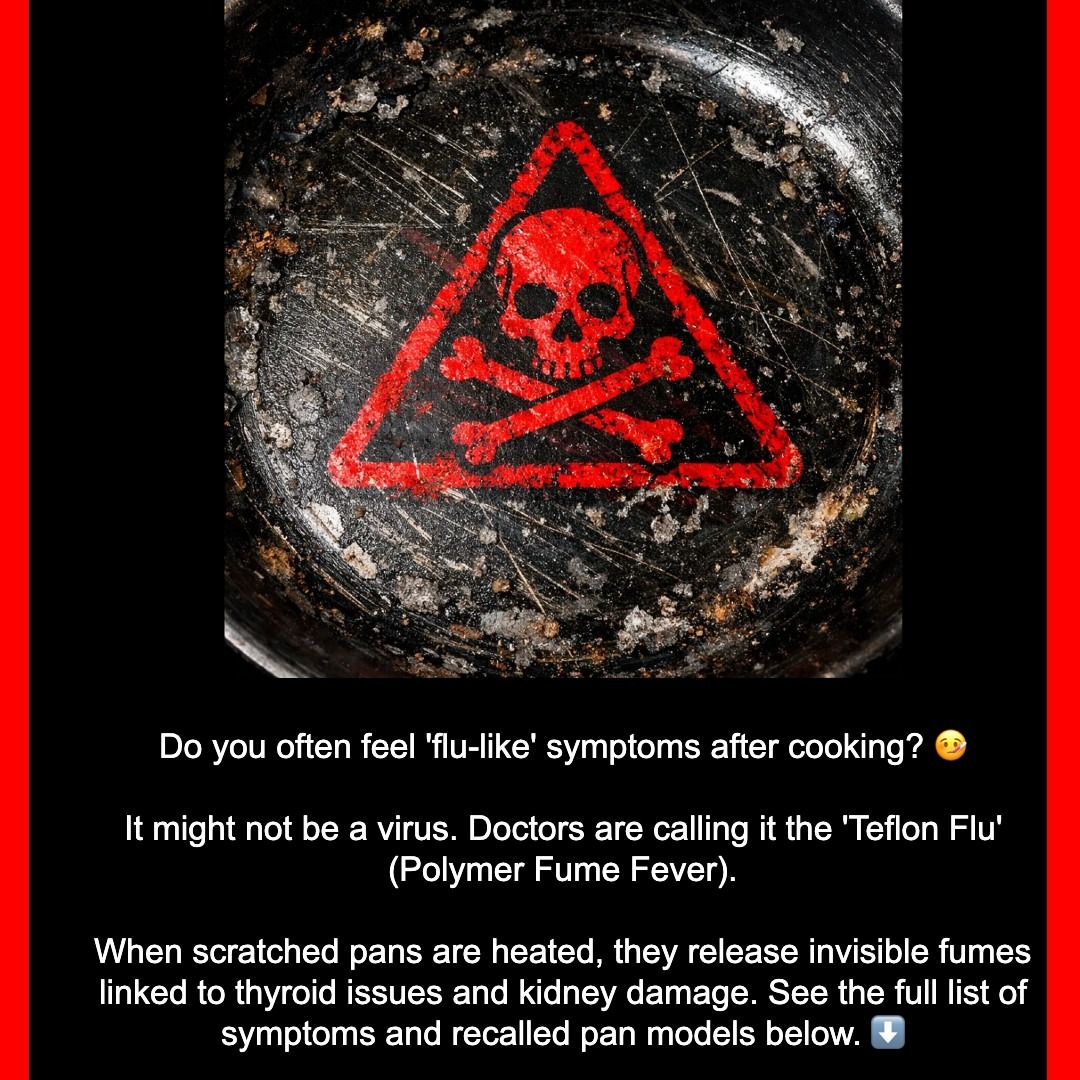
It begins with a hiss—the sound of a steak searing or an egg sliding effortlessly off a smooth black surface. For decades, non-stick pans have been the "hero" of the modern kitchen, promising easy cleanup and convenience. But a cascade of explosive scientific research from 2023 to 2025 has shattered this illusion.
That scratch on your pan isn’t just cosmetic damage. It is a toxic gateway. New studies reveal that damaged cookware is releasing a "particulate storm" into your family's meals, linked to kidney cancer, infertility, and a mysterious illness filling emergency rooms across the country.
1. The 2.3 Million Particle Explosion
For years, manufacturers claimed that if Teflon chipped off, it would pass harmlessly through the body. They were wrong.
A groundbreaking study led by researchers at Flinders University used advanced Raman imaging to see what human eyes cannot. They discovered that a simple 5cm scratch on a non-stick pan creates a microscopic catastrophe.
The Shocking Numbers:
- A Single Scratch: Releases approximately 9,100 plastic particles instantly.
- A Single Meal: Cooking in a damaged pan releases up to 2.3 million microplastics and nanoplastics into your food.
The real danger lies in nanoplastics. Unlike larger flakes, these particles are small enough to pass through your intestinal wall, enter your bloodstream, and accumulate in your liver, kidneys, and brain.
2. "Forever Chemicals" Inside Your Body
Non-stick coating (PTFE) belongs to a family of chemicals called PFAS, also known as "Forever Chemicals." They are called this because the bond between carbon and fluorine is so strong that it never breaks down naturally.
Once you ingest these particles, they stay in your body for years. The "half-life" (the time it takes to eliminate just 50% of the toxin) can be up to 27 years for some variants.
The "PFOA-Free" Lie
Many pans today are labeled "PFOA-Free." While technically true, manufacturers often replace the banned PFOA with substitute chemicals like GenX. Toxicology reports suggest these replacements cause the same liver and kidney damage as the original poisons.
3. The Health Risks: A Body Under Siege
The International Agency for Research on Cancer (IARC) recently classified PFOA as a Group 1 Carcinogen (Carcinogenic to Humans)—the same category as asbestos and plutonium. The accumulation of these chemicals is linked to:
- Kidney Cancer: The kidneys filter these toxins, putting them at the highest risk.
- Testicular Cancer: High exposure is directly linked to hormonal disruption and cancer in men.
- Thyroid Disease: PFAS hijack the thyroid’s transport system, leading to hypothyroidism and metabolism issues.
- Infertility: These chemicals lower sperm counts in men and disrupt ovulation in women.
4. The Acute Threat: "Teflon Flu"
While cancer takes years to develop, Polymer Fume Fever (or "Teflon Flu") is happening right now. When a non-stick pan overheats (above 500°F/260°C), it releases invisible, odorless fumes.
Symptoms mimic the flu:
- Sudden high fever
- Shaking chills
- Chest tightness
- Severe body aches
Poison centers reported a massive spike in cases in 2023 and 2024. Most people assume they have a virus, never realizing their frying pan poisoned them.
5. The Solution: Safe Alternatives
You don't have to stop cooking, but you must change your tools. Here are the safest materials recommended by experts:
| Material | Safety Profile | Best Use |
|---|---|---|
| Cast Iron | 100% Toxin-Free. Leaches healthy iron. | Searing steaks, frying, baking. |
| Stainless Steel | Safe (Grade 18/10). No coating to peel. | Boiling, sauces, daily cooking. |
| Carbon Steel | Safe. Lighter than cast iron. | Wok cooking, eggs (once seasoned). |
| Ceramic (100%) | Safe (Kiln-fired clay). | Slow cooking, baking. |
⚠️ The Kitchen Recall
Go to your kitchen right now. Look at your non-stick pans. If you see scratches, peeling, or silver metal showing through the black coating, throw it away immediately. It is not an asset; it is a hazardous waste emitter in your home.