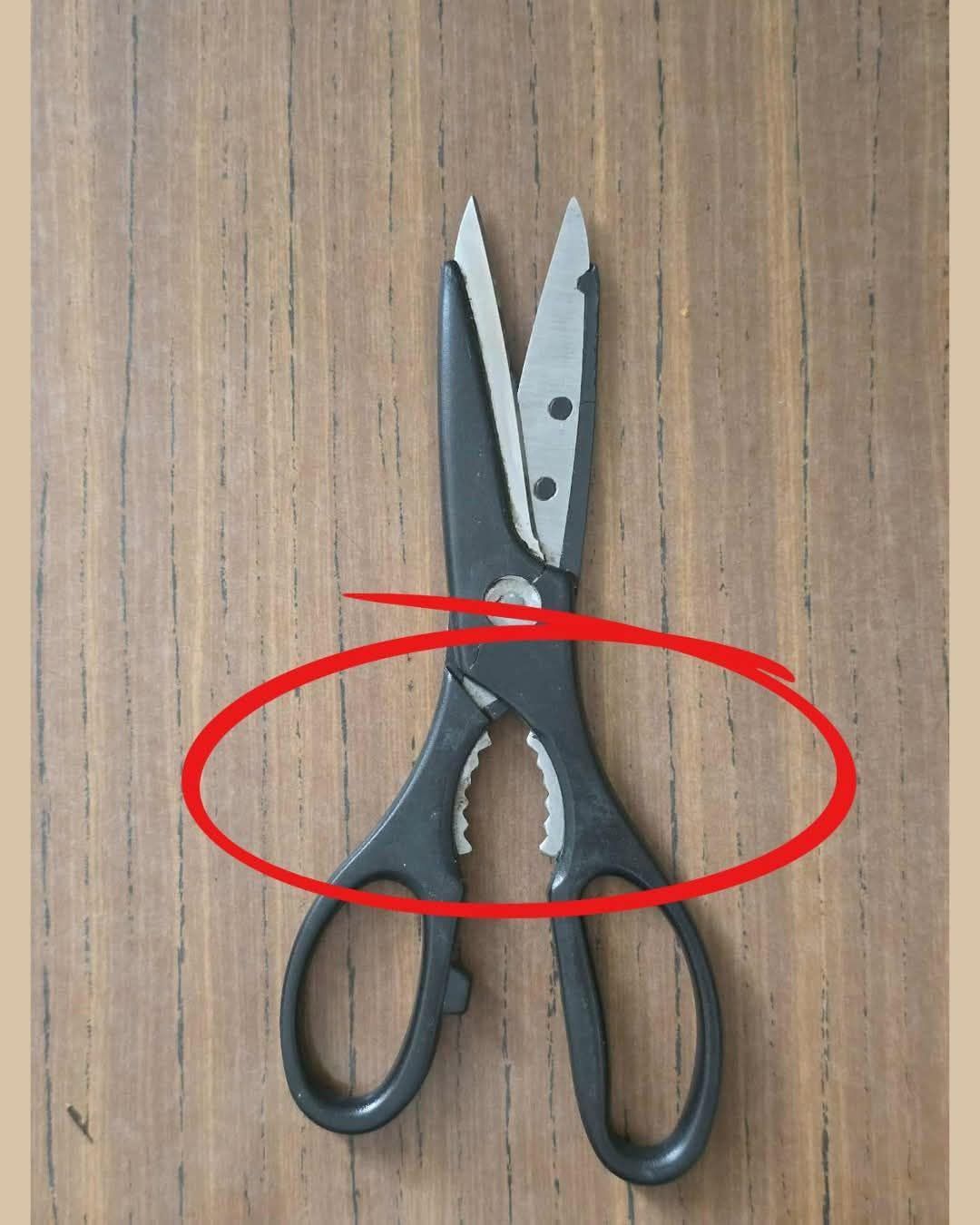
Ever notice the random jagged section between the handles of your kitchen scissors—the little metal teeth housed behind your fingers? You have likely also thought, what the heck even is this? If you have never used this portion of your scissors, you are not alone. Many people don’t even recognize this part as functional. It just is… there.
What you should know is that it is actually quite helpful. It is not an accident of design or a bizarre feature of the manufacturer. That little gripping part is an integrated tool you have probably been ignoring for years. Let’s talk about what it is, how to use it, and why this little piece is one of the underappreciated components of your kitchen apparatus.
First: What is this toothed part?
You will find it either where the handles start to curve inward—sometimes it is metal, other times, reinforced plastic, always rugged-looking. If you close the scissors slowly, the ridges come together and lock, creating a gripping surface that looks like it has to do something instead of silently waiting for action in your drawer.
It is usually called a “jar opener,” “nutcracker,” or sometimes even “bone cracker” depending on the brand—but it is essentially a gripping device and nothing more. It enhances the level of traction and control if your hands are not cutting it.
Trick #1: Open jars and bottles without the crying
Let’s say you have a jar lid that will not budge—a poor vacuum-sealed jam that refuses to leave its jar. You tried the dish towel like an amateur. You’ve hit the lid on the counter. Nothing to lose, you say. That’s where the built-in gripper will come to the rescue.
Here’s how:
Close the scissors enough that the teeth simply touch.
Slide the jar lid inside that ridged area—making it snug.
One hand holds the scissors, the other twists the jar. Twist.
The grooves give you traction, and the shape gives you even pressure, so you’re not wrestling with a slippery lid getting sore wrists. This can also apply to the small bottle caps—we’re talking soda bottles, tonic water, cooking sauces. If you have limited grip strength or have arthritis? Better yet. This can assist a lot.
Trick #2: Cracking nuts without a fancy gadget