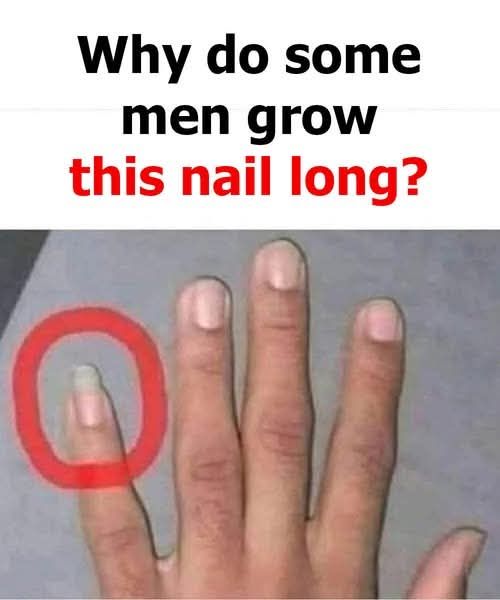
This tradition continues in subtle ways today. In certain professions — like taxi drivers in parts of Asia — a long pinky nail is still worn as a nod to heritage or personal identity, not because of social status, but as a cultural echo of the past.
2. A Mark of Intelligence and Education
In Chinese and Greek traditions, a long pinky nail was associated with intellectual life.
Scholars and scribes — whose work was mental, not physical — let their pinky nails grow as a sign they spent their days writing, reading, and thinking, not working with their hands.
The nail became a symbol of refinement, learning, and scholarly pursuit.
Even today, some academics and artists keep the practice alive — not out of vanity, but as a personal ritual or quiet rebellion against the idea that productivity must look a certain way.
3. A Practical Tool for Daily Tasks
In some cultures, the long pinky nail isn’t about symbolism — it’s about function.
In Turkey, the Middle East, and parts of South Asia, men grow the pinky nail to use as a natural tool.
It’s used for: